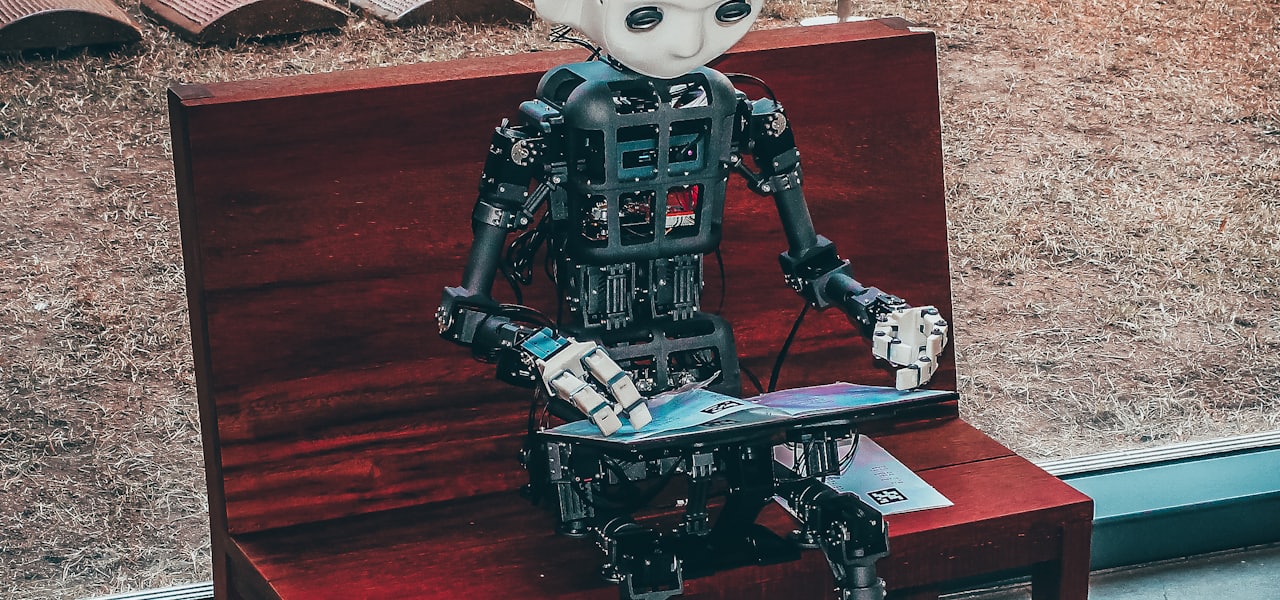
Web science is an emerging interdisciplinary field concerned with the study of large-scale socio-technical systems, particularly the World Wide Web. It considers the relationship between people and technology, the ways that society and technology co-constitute one another and the impact of this co-constitution on broader society. Web Science combines research from disciplines as diverse as sociology, computer science, economics, and mathematics. The Web Science Institute, founded at the University of Southampton by director Wendy Hall and colleagues, describes Web Science as focusing "the analytical power of researchers from disciplines as diverse as mathematics, sociology, economics, psychology, law and computer science to understand and explain the Web. It is necessarily interdisciplinary – as much about social and organizational behaviour as about the underpinning technology." A central pillar of Web science development is Artificial Intelligence or "AI". The current artificial intelligence that in development at the moment is Human-Centered, with goals to further professional development courses as well as influencing public policy. Artificial intelligence developers are focused on the most impactful uses of this technology, while also hoping to expedite the growth and development of the human race. An early definition was given by American computer scientist Ben Shneiderman: "Web Science" is processing the information available on the web in similar terms to those applied to natural environment. == Areas of activity == === Emergent properties === Philip Tetlow, an IBM-based scientist influential in the emergence of web science as an independent discipline, argued for the concept of web life, which considers the Web not as a connected network of computers, as in common interpretations of the Internet, but rather as a sociotechnical machine capable of fusing together individuals and organisations into larger coordinated groups. It argues that unlike the technologies that have come before it, the Web is different in that its phenomenal growth and complexity are starting to outstrip our capability to control it directly, making it impossible for us to grasp its completeness in one go. Tetlow made use of Fritjof Capra's concept of the 'web of life' as a metaphor. == Research groups == There are numerous academic research groups engaged in Web Science research, many of which are members of WSTNet, the Web Science Trust Network of research labs. Health Web Science emerged as a sub-discipline of Web Science that studies the role of the Web's impact on human's health outcomes and how to further utilize the Web to improve health outcomes. These groups focus on the developmental possibilities, provided through Web Science, in areas such as health care and social welfare. Discussion of web science has been widely adopted as a method in which the internet can have a real world impact in the field of medicine, currently coined Medicine 2.0. The World Wide Web acts as a medium for the spread and circulation of knowledge, though these various research groups consider themselves responsible for maintaining verifiable and testable knowledge. Using their knowledge of the healthcare system as well as web science, researchers are focused on formatting and structuring their knowledge in a way that is easily accessible throughout the internet. The World Wide Web is quickly evolving meaning that the information we provide and its formatting must also. Recognizing the overlap between both aspects, the spread of knowledge and development of the internet, allows us to properly display our knowledge in a manner that evolves as quickly as the internet and everyday medical research. The accessibility of the internet and quick development of knowledge must be companied with efficient formatting to allocate successful dissemination of information, as described by these various researcher groups. == Related major conferences == Association for Computing Machinery (ACM), Hypertext Conference (HT) sponsored by SIGWEB ACM SIGCHI Conference on Human Factors in Computing Systems (CHI) International AAAI Conference on Weblogs and Social Media (ICWSM) The Web Conference (WWW) Association for Computing Machinery (ACM) Web Science Conference (WebSci)
Image stitching
Image stitching or photo stitching is the process of combining multiple photographic images with overlapping fields of view to produce a segmented panorama or high-resolution image. Commonly performed through the use of computer software, most approaches to image stitching require nearly exact overlaps between images and identical exposures to produce seamless results, although some stitching algorithms actually benefit from differently exposed images by doing high-dynamic-range imaging in regions of overlap. Some digital cameras can stitch their photos internally. == Applications == Image stitching is widely used in modern applications, such as the following: Document mosaicing Image stabilization feature in camcorders that use frame-rate image alignment High-resolution image mosaics in digital maps and satellite imagery Medical imaging Multiple-image super-resolution imaging Video stitching Object insertion == Process == The image stitching process can be divided into three main components: image registration, calibration, and blending. === Image stitching algorithms === In order to estimate image alignment, algorithms are needed to determine the appropriate mathematical model relating pixel coordinates in one image to pixel coordinates in another. Algorithms that combine direct pixel-to-pixel comparisons with gradient descent (and other optimization techniques) can be used to estimate these parameters. Distinctive features can be found in each image and then efficiently matched to rapidly establish correspondences between pairs of images. When multiple images exist in a panorama, techniques have been developed to compute a globally consistent set of alignments and to efficiently discover which images overlap one another. A final compositing surface onto which to warp or projectively transform and place all of the aligned images is needed, as are algorithms to seamlessly blend the overlapping images, even in the presence of parallax, lens distortion, scene motion, and exposure differences. === Image stitching issues === Since the illumination in two views cannot be guaranteed to be identical, stitching two images could create a visible seam. Other reasons for seams could be the background changing between two images for the same continuous foreground. Other major issues to deal with are the presence of parallax, lens distortion, scene motion, and exposure differences. In a non-ideal real-life case, the intensity varies across the whole scene, and so does the contrast and intensity across frames. Additionally, the aspect ratio of a panorama image needs to be taken into account to create a visually pleasing composite. For panoramic stitching, the ideal set of images will have a reasonable amount of overlap (at least 15–30%) to overcome lens distortion and have enough detectable features. The set of images will have consistent exposure between frames to minimize the probability of seams occurring. === Keypoint detection === Feature detection is necessary to automatically find correspondences between images. Robust correspondences are required in order to estimate the necessary transformation to align an image with the image it is being composited on. Corners, blobs, Harris corners, and differences of Gaussians of Harris corners are good features since they are repeatable and distinct. One of the first operators for interest point detection was developed by Hans Moravec in 1977 for his research involving the automatic navigation of a robot through a clustered environment. Moravec also defined the concept of "points of interest" in an image and concluded these interest points could be used to find matching regions in different images. The Moravec operator is considered to be a corner detector because it defines interest points as points where there are large intensity variations in all directions. This often is the case at corners. However, Moravec was not specifically interested in finding corners, just distinct regions in an image that could be used to register consecutive image frames. Harris and Stephens improved upon Moravec's corner detector by considering the differential of the corner score with respect to direction directly. They needed it as a processing step to build interpretations of a robot's environment based on image sequences. Like Moravec, they needed a method to match corresponding points in consecutive image frames, but were interested in tracking both corners and edges between frames. SIFT and SURF are recent key-point or interest point detector algorithms but a point to note is that SURF is patented and its commercial usage restricted. Once a feature has been detected, a descriptor method like SIFT descriptor can be applied to later match them. === Registration === Image registration involves matching features in a set of images or using direct alignment methods to search for image alignments that minimize the sum of absolute differences between overlapping pixels. When using direct alignment methods one might first calibrate one's images to get better results. Additionally, users may input a rough model of the panorama to help the feature matching stage, so that e.g. only neighboring images are searched for matching features. Since there are smaller group of features for matching, the result of the search is more accurate and execution of the comparison is faster. To estimate a robust model from the data, a common method used is known as RANSAC. The name RANSAC is an abbreviation for "RANdom SAmple Consensus". It is an iterative method for robust parameter estimation to fit mathematical models from sets of observed data points which may contain outliers. The algorithm is non-deterministic in the sense that it produces a reasonable result only with a certain probability, with this probability increasing as more iterations are performed. It being a probabilistic method means that different results will be obtained for every time the algorithm is run. The RANSAC algorithm has found many applications in computer vision, including the simultaneous solving of the correspondence problem and the estimation of the fundamental matrix related to a pair of stereo cameras. The basic assumption of the method is that the data consists of "inliers", i.e., data whose distribution can be explained by some mathematical model, and "outliers" which are data that do not fit the model. Outliers are considered points which come from noise, erroneous measurements, or simply incorrect data. For the problem of homography estimation, RANSAC works by trying to fit several models using some of the point pairs and then checking if the models were able to relate most of the points. The best model – the homography, which produces the highest number of correct matches – is then chosen as the answer for the problem; thus, if the ratio of number of outliers to data points is very low, the RANSAC outputs a decent model fitting the data. === Calibration === Image calibration aims to minimize differences between an ideal lens models and the camera-lens combination that was used, optical defects such as distortions, exposure differences between images, vignetting, camera response and chromatic aberrations. If feature detection methods were used to register images and absolute positions of the features were recorded and saved, stitching software may use the data for geometric optimization of the images in addition to placing the images on the panosphere. Panotools and its various derivative programs use this method. ==== Alignment ==== Alignment may be necessary to transform an image to match the view point of the image it is being composited with. Alignment, in simple terms, is a change in the coordinates system so that it adopts a new coordinate system which outputs image matching the required viewpoint. The types of transformations an image may go through are pure translation, pure rotation, a similarity transform which includes translation, rotation and scaling of the image which needs to be transformed, Affine or projective transform. Projective transformation is the farthest an image can transform (in the set of two dimensional planar transformations), where only visible features that are preserved in the transformed image are straight lines whereas parallelism is maintained in an affine transform. Projective transformation can be mathematically described as x ′ = H ⋅ x , {\displaystyle x'=H\cdot x,} where x {\displaystyle x} is points in the old coordinate system, x ′ {\displaystyle x'} is the corresponding points in the transformed image and H {\displaystyle H} is the homography matrix. Expressing the points x {\displaystyle x} and x ′ {\displaystyle x'} using the camera intrinsics ( K {\displaystyle K} and K ′ {\displaystyle K'} ) and its rotation and translation [ R t ] {\displaystyle [R\,t]} to the real-world coordinates X {\displaystyle X} and < m a t h > x {\displaystyle , we get Using the abo
Automatic1111
AUTOMATIC1111 Stable Diffusion Web UI (SD WebUI, A1111, or Automatic1111) is an open source generative artificial intelligence program that allows users to generate images from a text prompt. It uses Stable Diffusion as the base model for its image capabilities together with a large set of extensions and features to customize its output. == History == SD WebUI was released on GitHub on August 22, 2022, by AUTOMATIC1111, 1 month after the initial release of Stable Diffusion. At the time, Stable Diffusion could only be run via the command line. SD WebUI quickly rose in popularity and has been described as "the most popular tool for running diffusion models locally." SD WebUI is one of the most popular user interfaces for Stable Diffusion, together with ComfyUI. In February 2024, a book was published by ja:Gijutsu Hyoronsha on using Stable Diffusion with SD WebUI in Japanese. As of July 2024, the project had 136,000 stars on GitHub. == Features == SD WebUI uses Gradio for its user interface. Each parameter in the Stable Diffusion program is exposed via a UI interface within SD WebUI. SD WebUI contains additional parameters not included in Stable Diffusion itself, such as support for Low-rank adaptations, ControlNet and custom variational autoencoders. SD WebUI supports prompt weighting, image-to-image based generation, inpainting, outpainting and image scaling. It supports over 20 samplers including DDIM, Euler, Euler a, DPM++ 2M Karras, and UniPC. It is also used for its various optimizations over the base Stable Diffusion. == Stable Diffusion WebUI Forge == Stable Diffusion WebUI Forge (Forge) is a notable fork of SD WebUI started by Lvmin Zhang, who is also the creator of ControlNet and Fooocus. The initial goal of Forge was to improve the performance and features of SD WebUI with the intention to upstream changes back to SD WebUI. One of Forge's optimizations allowed users with low VRAM to generate images faster on some versions of Stable Diffusion. It improved generation speed for users with 8GB and 6GB VRAM by 30-45% and 60-75%, respectively. Forge also includes extra features such as support for more samplers than standard SD WebUI. Some of Forge's optimizations were borrowed from ComfyUI, and others were developed by the Forge team. In August 2024, Forge added support for the Flux diffusion model developed by Black Forest Labs, which is not yet supported by SD WebUI.
Interim Measures for the Management of Anthropomorphic AI Interactive Services
The Interim Measures for the Management of Anthropomorphic AI Interactive Services (Chinese: 人工智能拟人化互动服务管理暂行办法) is a document proposed by the Cyberspace Administration of China to regulate anthropomorphic artificial intelligence systems. The draft was released on December 27, 2026 for public comment period until January 25, 2026. The proposed document would prohibit AI companies and users of AI services from generating certain types of content deemed harmful to national interests or the social order, and impose various regulatory and safety requirements on providers of AI systems. The proposed regulation is motivated by concerns about the psychological and social effects of AI systems that are perceived as personalities by their users, including addiction, encouragement of self-harm, or generation of illegal content. == Description == === Scope === The regulation would apply to AI systems that are offered to the general public within China. They would not apply to company-internal or research use, or to products that are only available outside of China. For the purpose of the regulation, anthropomorphic Ai systems are defined as those that "simulate human personality traits, modes of thinking, and communication styles, and that engage in emotional interaction with humans through text, images, audio, video, or other means". === Requirements === The regulation would require AI providers to monitor users for signs of harmful use and to take various interventions when indications of harmful use are detected. It would also prohibit AI systems from certain types of behaviors and generation of certain types of content. In some circumstances where a user appears to be at risk of self harm, the system would be required to hand over control to a human operator who would manually intervene. The regulation would also require more rigorous practices for managing the provenance of training data used to develop these systems, and would require explicit opt-in consent from users before their interactions with an AI system were used as training data. Data used to train the regulated systems would be required to reflect core socialist values and traditional Chinese culture.
National Security Memorandum on Artificial Intelligence
The Memorandum on Advancing the United States' Leadership in Artificial Intelligence; Harnessing Artificial Intelligence to Fulfill National Security Objectives; and Fostering the Safety, Security, and Trustworthiness of Artificial Intelligence is a memorandum signed by U.S. president Joe Biden. The memorandum is described as seeking to advance U.S. leadership in the development of safe, secure, and trustworthy artificial intelligence (AI); enable the U.S. government to use AI for national security; and contribute to international AI governance.
AUTINDEX
AUTINDEX is a commercial text mining software package based on sophisticated linguistics. AUTINDEX, resulting from research in information extraction, is a product of the Institute of Applied Information Sciences (IAI) which is a non-profit institute that has been researching and developing language technology since its foundation in 1985. IAI is an institute affiliated to Saarland University in Saarbrücken, Germany. AUTINDEX is the result of a number of research projects funded by the EU (Project BINDEX), by Deutsche Forschungsgemeinschaft and the German Ministry for Economy. Amongst the latter there are the projects LinSearch, and WISSMER, see also the reference to IAI-Website. The basic functionality of AUTINDEX is the extraction of key words from a document to represent the semantics of the document. Ideally the system is integrated with a thesaurus that defines the standardised terms to be used for key word assignment. AUTINDEX is used in library applications (e.g. integrated in dandelon.com) as well as in high quality (expert) information systems, and in document management and content management environments. Together with AUTINDEX a number of additional software comes along such as an integration with Apache Solr / Lucene to provide a complete information retrieval environment, a classification and categorisation system on the basis of a machine learning software that assigns domains to the document, and a system for searching with semantically similar terms that are collected in so called tag clouds.
International Journal of Pattern Recognition and Artificial Intelligence
The International Journal of Pattern Recognition and Artificial Intelligence was founded in 1987 and is published by World Scientific. The journal covers developments in artificial intelligence, and its sub-field, pattern recognition. This includes articles on image and language processing, robotics and neural networks. == Abstracting and indexing == The journal is abstracted and indexed in: SciSearch ISI Alerting Services CompuMath Citation Index Current Contents/Engineering, Computing & Technology Inspec io-port.net Compendex Computer Abstracts